
Digital maThe Ultimate Guide: How to Learn Digital Marketing in 2026
Digital marketing has become one of the fastest-growing skills in today’s online world. Businesses of all sizes are moving toward digital platforms to reach customers, increase sales, build strong brands, and compete in competitive markets. Because of this growing demand, learning digital marketing can open many career, freelancing, and business opportunities.
If you are a beginner and want to understand how to learn digital marketing, you need more than random tutorials or social media tips. You need a clear roadmap that explains what to learn, which skills to develop, which tools to use, and how to gain practical experience.
The best way to understand how to learn digital marketing is to start with the basics and gradually develop practical skills. You can learn through online courses, free resources, tutorials, official documentation, real projects, and consistent practice.
Instead of trying to learn everything at once, focus on one area at a time and understand how different digital marketing channels work together.
This complete guide explains how to learn digital marketing in 2026 through 13 practical and proven steps. You will learn about SEO, keyword research, content marketing, social media marketing, Google Ads, Meta Ads, email marketing, website optimization, analytics, digital marketing tools, practical projects, portfolio building, and career opportunities.
Table of Contents
- How to Learn Digital Marketing: Complete Roadmap
- What Is Digital Marketing?
- Why Learn Digital Marketing in 2026?
- Step 1: Understand Digital Marketing Fundamentals
- Step 2: Learn Search Engine Optimization
- Step 3: Understand Keyword Research
- Step 4: Learn Content Marketing
- Step 5: Master Social Media Marketing
- Step 6: Learn Google Ads
- Step 7: Learn Meta Ads
- Step 8: Learn Email Marketing
- Step 9: Learn Website and Landing Page Optimization
- Step 10: Learn Digital Marketing Tools
- Step 11: Learn Analytics and Performance Tracking
- Step 12: Create Real Digital Marketing Projects
- Step 13: Build a Digital Marketing Portfolio
- Digital Marketing Learning Roadmap
- Stay Updated With Digital Marketing Trends
- How AI Is Changing Digital Marketing in 2026
- Common Mistakes Beginners Should Avoid
- Career Opportunities After Learning Digital Marketing
- How Long Does It Take to Learn Digital Marketing?
- Practical Tips for Learning Digital Marketing
- Frequently Asked Questions
- Conclusion
How to Learn Digital Marketing: Complete Roadmap
If you are wondering how to learn digital marketing as a beginner, the best approach is to learn one skill at a time and apply what you learn through practical projects.
A simple learning path looks like this:
Learn → Practice → Measure → Improve → Build a Portfolio → Specialize
Your learning roadmap should include:
- Digital marketing fundamentals
- Search Engine Optimization
- Keyword research
- Content marketing
- Social media marketing
- Google Ads
- Meta Ads
- Email marketing
- Website optimization
- Analytics
- Marketing tools
- Practical projects
- Portfolio development
You can also understand how different marketing channels work together by following our Digital Marketing Strategy Framework for Business Growth.
A structured learning process makes how to learn digital marketing much easier because you know exactly what to study next instead of jumping randomly between different topics.
What Is Digital Marketing?
Digital marketing is the process of promoting products, services, brands, or businesses through online channels.
These channels include:
- Search engines
- Websites
- Social media
- Online advertising
- Video platforms
- Content platforms
- Mobile applications
Traditional marketing depends heavily on offline methods such as newspapers, television, radio, billboards, and physical advertising.
Digital marketing allows businesses to reach specific audiences online and measure how people interact with campaigns.
For example, a local business can use SEO to attract organic visitors, social media to build awareness, Google Ads to generate leads, and email marketing to maintain relationships with existing customers.
The major areas of digital marketing include:
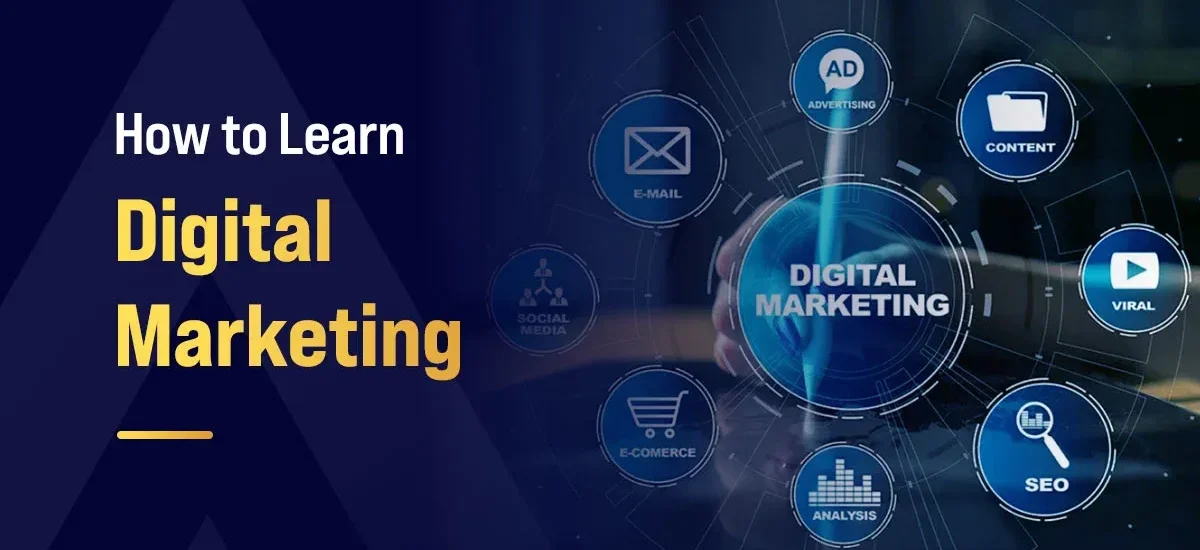
- Search Engine Optimization (SEO)
- Social Media Marketing (SMM)
- Search Engine Marketing (SEM)
- Content Marketing
- Email Marketing
- Affiliate Marketing
- Influencer Marketing
- Online Advertising
- Conversion Rate Optimization
- Analytics and Performance Tracking
Understanding these areas is an important part of learning how to learn digital marketing because each channel has a different purpose but can work together as part of one marketing strategy.
Why Learn Digital Marketing in 2026?
Digital marketing continues to evolve as customer behavior, technology, search engines, social media platforms, and artificial intelligence change.
Businesses increasingly depend on online visibility to attract customers, generate leads, increase sales, and build brand awareness.
Learning digital marketing can help you:
- Build a career
- Start freelancing
- Promote your own business
- Generate leads
- Improve website visibility
- Manage social media
- Run advertising campaigns
- Create content strategies
- Analyze marketing performance
- Build an online brand
You do not need to become an expert in every marketing channel.
Instead, learn the fundamentals and then choose a specialization based on your goals.
For example, if you enjoy writing and research, SEO and content marketing may be suitable. If you enjoy advertising and data, performance marketing may be a better choice. If you enjoy communication and creativity, social media marketing could be a strong option.
This is why how to learn digital marketing should depend partly on your career goals and interests.
Step 1: Understand Digital Marketing Fundamentals
Before learning advanced techniques, understand the basic principles of digital marketing.
Start with:
- Target audience
- Buyer persona
- Customer journey
- Marketing funnel
- Brand awareness
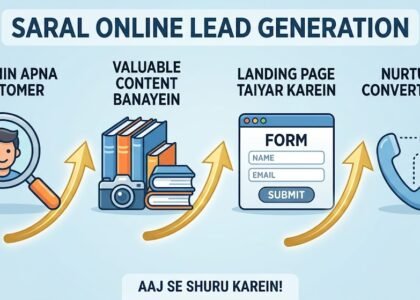
- Lead generation
- Conversion
- Customer retention
- Marketing objectives
- Key performance indicators
A basic customer journey can look like:
Awareness → Interest → Consideration → Conversion → Retention
Understanding this journey makes it easier to understand how individual marketing channels work.
SEO can help people discover a business. Content can educate them. Social media can build engagement. Paid advertising can generate targeted traffic. Email marketing can nurture leads. Analytics can measure the results.
If you are starting from zero, understanding these fundamentals is the first major step in how to learn digital marketing successfully.
Step 2: Learn Search Engine Optimization
Search Engine Optimization is one of the most important skills to learn when starting digital marketing.
SEO helps websites improve their visibility in search engine results and attract relevant organic traffic.
Beginners should learn:
- Keyword research
- Search intent
- On-page SEO
- Technical SEO
- Internal linking
- Content optimization
- Link building
- Website speed
- Mobile optimization
- Image SEO
- Meta titles
- Meta descriptions
Start by understanding how search engines discover and understand web pages.
Then learn how to select keywords and create useful content that satisfies search intent.
SEO is a valuable skill because it teaches you how websites, content, keywords, search engines, and users work together.
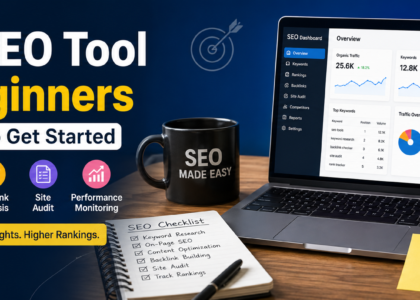
If you are new to SEO tools, read our Best SEO Tool for Beginners: Easy Guide to Get Started to understand useful tools for keyword research, website analysis, and SEO optimization.
SEO should be one of the first skills in your how to learn digital marketing roadmap because it provides a strong foundation for understanding online visibility.
Step 3: Understand Keyword Research
Keyword research helps marketers discover what people search for online.
For example, people interested in digital marketing may search for:
- How to learn digital marketing
- Digital marketing course
- Digital marketing roadmap
- Best SEO tools for beginners
- SEO guide for beginners
- Digital marketing strategy
- Google Ads for beginners
- Social media marketing tips
Do not choose keywords only because they have high search volume.
You should also consider:
- Search intent
- Relevance
- Competition
- Keyword difficulty
- Business value
- Audience needs
Search intent is especially important.
Someone searching for “what is SEO” is probably looking for educational information, while someone searching for “SEO agency near me” may have commercial intent.
Understanding search intent helps you create content that matches what users actually want.
Keyword research can also help you discover long-tail keywords that may be less competitive and more specific.
Learning keyword research is an essential part of how to learn digital marketing because keywords connect what users search for with the content and products businesses provide.
Step 4: Learn Content Marketing
Content marketing focuses on creating useful and relevant content for your target audience.
Content can:
- Attract visitors
- Educate customers
- Build trust
- Support SEO
- Generate leads
- Support sales
- Increase brand authority
Common content formats include:
- Blog posts
- Videos
- Social media posts
- Infographics
- Case studies
- Ebooks
- Email newsletters
- Guides
- Tutorials
A strong content strategy starts with audience problems.
Instead of creating content simply because you need another blog post, identify questions and problems your potential customers are trying to solve.
For example, a digital marketing website can publish:
- SEO tutorials
- Google Ads guides
- Social media tips
- Local SEO guides
- Digital marketing case studies
- Website optimization tutorials
Focus on creating useful content rather than publishing a large quantity of low-value articles.
Content marketing is therefore another important skill when learning how to learn digital marketing because strong content supports SEO, social media, email marketing, and lead generation.
Step 5: Master Social Media Marketing
Social media marketing helps businesses connect with their audiences and build relationships.
Popular platforms include:
- YouTube
- X
Beginners should learn:
- Audience research
- Platform selection
- Content planning
- Content creation
- Social media calendars
- Engagement
- Community management
- Hashtag research
- Social media analytics
- Paid social advertising
You do not need to use every platform.
Choose platforms based on where your target audience spends time.
For example, a B2B company may benefit from LinkedIn, while a visual consumer brand may focus more on Instagram and YouTube.
Social media should support your overall business and marketing goals rather than operate as a separate activity.
When you are learning how to learn digital marketing, social media also helps you develop communication, creativity, audience research, and content creation skills.
Step 6: Learn Google Ads
Google Ads allows businesses to reach potential customers through paid advertising.
It can be useful when businesses want targeted traffic and measurable campaign results.
To learn Google Ads, understand:
- Campaign objectives
- Keyword targeting
- Search campaigns
- Ad copywriting
- Audience research
- Budget management
- Landing pages
- Conversion tracking
- Cost per click
- Cost per lead
- Return on ad spend
Paid advertising requires testing and optimization.
You can test different:
- Keywords
- Headlines
- Ad copy
- Audiences
- Landing pages
- Offers
- Budgets
Do not judge an advertising campaign only by clicks.
A successful campaign should contribute toward meaningful business results such as qualified leads, sales, registrations, or another conversion.
Google Ads is an important skill for anyone who wants to learn how to learn digital marketing with a focus on paid advertising and performance marketing.
Step 7: Learn Meta Ads
Meta Ads can help businesses reach audiences across Facebook and Instagram.
When learning Meta Ads, focus on:
- Audience research
- Campaign objectives
- Ad creatives
- Copywriting
- Targeting
- Retargeting
- Budget management
- Conversion tracking
- Creative testing
Different audiences may respond to different messages and creative styles.
Test multiple versions instead of assuming one advertisement will work for everyone.
Meta advertising can support:
- Brand awareness
- Website traffic
- Engagement
- Lead generation
- Sales
- Remarketing
Understanding campaign objectives and conversion tracking is important for anyone who wants to develop paid advertising skills.
If your goal is to understand how to learn digital marketing for freelancing or agency work, learning both Google Ads and Meta Ads can make your skill set more valuable.
Step 8: Learn Email Marketing
Email marketing allows businesses to communicate directly with subscribers and existing customers.
It can be used for:
- Welcome emails
- Product updates
- Promotional campaigns
- Educational newsletters
- Lead nurturing
- Customer retention
- Special offers
Important email marketing skills include:
- Building subscriber lists
- Writing effective emails
- Audience segmentation
- Email automation
- Campaign planning
- Performance tracking
Avoid sending unnecessary promotional messages.
Instead, provide useful information and create a long-term relationship with your audience.
Email marketing is especially useful for nurturing leads after someone has already interacted with your business.
For beginners exploring how to learn digital marketing, email marketing is a useful skill because it teaches customer retention, communication, automation, and conversion.
Step 9: Learn Website and Landing Page Optimization
A digital marketing campaign can bring visitors to your website, but the website must also encourage visitors to take action.
A good landing page should have:
- A clear headline
- Strong value proposition
- Relevant content
- Trust signals
- Easy navigation
- Clear call-to-action
- Mobile-friendly design
- Fast loading speed
For example, if a Google Ads campaign offers a free consultation, the landing page should clearly explain the offer and make it easy for visitors to submit their information.
Website optimization is important because generating traffic is only one part of digital marketing.
The next step is converting visitors into leads, customers, subscribers, or other valuable actions.
Learning website optimization makes your how to learn digital marketing journey more complete because you learn how traffic turns into measurable business results.
Step 10: Learn Digital Marketing Tools
Digital marketing tools make research, optimization, campaign management, and reporting easier.
Some useful tools include:
- Google Analytics
- Google Search Console
- Google Ads
- Semrush
- Ahrefs
- Ubersuggest
- SE Ranking
- Moz
- Rank Math
- Yoast SEO
- Canva
- Email marketing platforms
- Social media management tools
Do not try to master every tool immediately.
Start with one or two tools and learn them through practical tasks.
For example, you can use Google Search Console to understand search performance, an SEO tool for keyword research, and an analytics platform to understand website traffic and user behavior.
Tools become much easier to understand when you use them on a real website or project.
Learning the right tools is an important part of how to learn digital marketing because professional marketers use tools to research, execute, measure, and improve campaigns.
Step 11: Learn Analytics and Performance Tracking
Analytics is one of the most important digital marketing skills because it helps you understand whether your marketing activities are producing results.
Important metrics include:
- Website traffic
- Organic traffic
- Click-through rate
- Conversion rate
- Cost per lead
- Engagement rate
- Customer acquisition cost
- Return on investment
- Return on ad spend
For example, if a webpage receives significant traffic but produces very few leads, you may need to improve the content, offer, call-to-action, or landing page.
Analytics allows marketers to make decisions based on data rather than assumptions.
A good digital marketer should not only know how to create campaigns but also understand how to measure and improve them.
Therefore, analytics should be included in every how to learn digital marketing roadmap.
Step 12: Create Real Digital Marketing Projects
If you want to know how to learn digital marketing effectively, practical experience is essential.
You can create:
- Your own website
- A blog
- A social media page
- A sample business project
- An SEO project
- A sample Google Ads campaign
- A Meta Ads campaign
- A content marketing project
Practical projects help you understand:
- How SEO works
- How content attracts visitors
- How advertisements perform
- How analytics provide insights
- How landing pages convert
- How different marketing channels work together
A simple project process is:
Goal → Audience → Research → Strategy → Content → Promotion → Measurement → Optimization
Do not wait until you know everything before starting.
Start with a small project and improve it as you learn.
Real projects are one of the most effective ways to understand how to learn digital marketing because theory becomes easier when you apply it.
Step 13: Build a Digital Marketing Portfolio
A strong portfolio can help demonstrate your skills to employers and clients.
Your portfolio can include:
- SEO projects
- Keyword research
- Blog content
- Website optimization
- Social media campaigns
- Google Ads experiments
- Meta Ads campaigns
- Analytics reports
- Case studies
For each project, explain:
Problem → Strategy → Actions → Results → Learnings
Do not simply upload screenshots.
Explain what you were trying to achieve, which strategy you used, what changes you made, and how you measured performance.
Even sample projects can demonstrate your skills when they are properly documented.
Portfolio building is the final practical stage of how to learn digital marketing because it turns your learning and practice into evidence that employers and clients can evaluate.
Digital Marketing Learning Roadmap
A structured roadmap can make learning easier for beginners.
Month 1: Digital Marketing Fundamentals and SEO
Learn:
- Digital marketing basics
- Target audience
- Customer journey
- Marketing funnel
- SEO fundamentals
- Keyword research
- On-page SEO
- Basic analytics
Practice by creating and optimizing website content.
Month 2: Content and Social Media
Focus on:
- Content marketing
- Blog writing
- Search intent
- Content planning
- Social media strategy
- Content calendars
- Social media analytics
Create and publish useful content consistently.
Month 3: Paid Advertising and Email Marketing
Learn:
- Google Ads
- Meta Ads
- Audience targeting
- Ad copywriting
- Landing pages
- Conversion tracking
- Email marketing
- Lead nurturing
Create sample campaigns and analyze their potential performance.
Month 4: Analytics and Real Projects
Focus on:
- Google Analytics
- Google Search Console
- Reporting
- Conversion tracking
- Campaign analysis
- Real-world projects
- Portfolio building
At this stage, combine your skills and evaluate the results.
Following this roadmap makes how to learn digital marketing more manageable because you can focus on a limited number of skills each month.
Stay Updated With Digital Marketing Trends
Digital marketing changes continuously because search engines, social platforms, technology, and customer behavior keep evolving.
To stay updated:
- Follow industry blogs
- Read official platform resources
- Watch expert tutorials
- Join marketing communities
- Study case studies
- Test new strategies
- Learn new tools
- Explore useful AI applications
However, do not blindly follow every new trend.
Before adopting a new strategy, ask whether it is relevant to your audience, business goals, and marketing objectives.
Continuous learning is essential for long-term success.
If you want to understand how to learn digital marketing beyond beginner level, developing the habit of continuous learning will be one of your most valuable skills.
How AI Is Changing Digital Marketing in 2026
Artificial intelligence is becoming an important part of modern marketing.
AI can help marketers with:
- Research
- Brainstorming
- Content planning
- Data analysis
- Customer segmentation
- Automation
- Campaign optimization
- Reporting
- Workflow improvement
However, AI should support marketing strategy rather than completely replace human judgment.
Marketers still need to:
- Understand customers
- Check information
- Maintain brand voice
- Review content
- Evaluate data
- Make strategic decisions
AI can help marketers work faster, but creativity, strategy, experience, and human judgment remain important.
The best approach is to combine AI tools with strong digital marketing fundamentals.
For beginners learning how to learn digital marketing in 2026, understanding how to use AI responsibly can provide an additional advantage.
Common Mistakes Beginners Should Avoid
Many beginners make the mistake of trying to learn everything at the same time.
Avoid:
- Trying every marketing tool immediately
- Copying competitors without understanding strategy
- Ignoring analytics
- Publishing low-quality content
- Focusing only on social media
- Expecting instant SEO results
- Running ads without conversion tracking
- Ignoring the target audience
- Learning only theory
- Avoiding practical projects
- Using AI content without reviewing it
- Changing strategies too frequently
Another common mistake is expecting immediate results.
SEO, content marketing, social media, and paid advertising all require testing, measurement, and optimization.
Focus on learning the fundamentals and improving through practice.
A clear roadmap is much better than randomly searching for how to learn digital marketing every day without following a structured learning plan.
Career Opportunities After Learning Digital Marketing
Digital marketing skills can help you explore different career and business opportunities.
Possible roles include:
- SEO Specialist
- SEO Executive
- Social Media Manager
- Content Marketing Specialist
- Google Ads Specialist
- Meta Ads Specialist
- Email Marketing Specialist
- Digital Marketing Manager
- Performance Marketing Specialist
- Freelance Digital Marketer
- Digital Marketing Consultant
You can also use digital marketing skills to promote your own business, build a personal brand, or start a freelancing career.
Practical experience, measurable results, communication skills, and a strong portfolio can help you stand out from other candidates.
Understanding how to learn digital marketing is especially valuable if your goal is to develop a long-term career rather than simply complete a course.
How Long Does It Take to Learn Digital Marketing?
The time required to learn digital marketing depends on your learning schedule, goals, and amount of practical experience.
You can understand the fundamentals within a few weeks, but developing professional-level skills usually requires consistent practice over several months.
A practical learning schedule can be:
- Month 1: Fundamentals and SEO
- Month 2: Content and social media
- Month 3: Google Ads, Meta Ads, and email marketing
- Month 4: Analytics, real projects, and portfolio building
Instead of focusing only on how quickly you can complete a course, focus on how well you can apply what you learn.
There is no single answer to how to learn digital marketing quickly because everyone has different goals, schedules, and learning styles.
Practical Tips for Learning Digital Marketing
Learn One Skill at a Time
Do not try to master SEO, social media, Google Ads, Meta Ads, and email marketing simultaneously.
Build one strong foundation before moving to another area.
Practice Regularly
Even 30–60 minutes of practical work every day can help you improve your skills.
Work on Real Projects
Create a website, blog, social media page, or sample campaign.
Track Your Results
Use analytics and reporting tools to understand what is working.
Learn From Mistakes
Campaign failures and SEO problems can teach you valuable lessons.
Build Before You Feel Ready
You do not need to know everything before starting.
Start small, practice consistently, and improve as you learn.
These habits make how to learn digital marketing easier because they turn learning into a regular process instead of a one-time activity.
Frequently Asked Questions
How can I learn digital marketing as a beginner?
Start with digital marketing fundamentals, then learn SEO, keyword research, content marketing, social media, paid advertising, email marketing, analytics, and website optimization. Practice each skill through real projects and gradually build a portfolio.
What is the best way to learn digital marketing?
The best way to learn digital marketing is to combine theory with practical experience. Study one skill, practice it on a real or sample project, measure the results, and improve your strategy.
Can I learn digital marketing without a degree?
Yes. A formal degree is not always required to learn digital marketing. Practical skills, projects, experience, certifications, and a strong portfolio can help demonstrate your abilities to employers and clients.
What should I learn first in digital marketing?
Start with digital marketing fundamentals, target audience research, customer journey, marketing funnels, SEO, content marketing, and basic analytics. Once you understand these concepts, move into social media and paid advertising.
Is digital marketing a good career in 2026?
Digital marketing can offer career opportunities because businesses continue using websites, search engines, social media, email, and online advertising to reach customers. Your opportunities depend on your skills, practical experience, specialization, and ability to produce measurable results.
Can I learn digital marketing for free?
Yes. You can learn many digital marketing fundamentals through free articles, official resources, tutorials, videos, documentation, and practical projects. Paid courses can provide structure, but consistent practice is also important.
Which digital marketing skill is best for beginners?
There is no single best skill for everyone. SEO, content marketing, social media, paid advertising, email marketing, and analytics are all valuable. Choose a skill based on your career goals and interests, then gradually develop related skills.
Is SEO still important in 2026?
SEO remains an important part of digital marketing because search engines can help businesses reach people who are actively searching for information, products, and services. Modern SEO should focus on useful content, search intent, technical quality, user experience, and website value.
How can I get practical digital marketing experience?
You can create your own website, start a blog, work on a personal project, help a small business, create sample campaigns, or build case studies. The goal is to apply what you learn and measure the results.
How long does it take to become a digital marketer?
You can learn the fundamentals within a few months with consistent study and practice. Becoming highly skilled takes longer because digital marketing includes several specialized areas.
How can I learn digital marketing faster?
To learn faster, follow a structured roadmap, focus on one skill at a time, practice every day, work on real projects, use digital marketing tools, analyze your results, and continuously improve your skills.
Conclusion
Learning digital marketing in 2026 can be a valuable decision for students, professionals, entrepreneurs, freelancers, and business owners.
If you want to understand how to learn digital marketing, start with the fundamentals, understand your target audience, learn SEO and content marketing, develop social media and paid advertising skills, and then learn analytics and website optimization.
Do not try to master every marketing channel at the same time.
Instead, follow this simple process:
Learn → Practice → Measure → Improve → Build a Portfolio → Specialize
Create real projects, test different strategies, analyze your results, and continuously improve your skills.
Whether you want to become a freelancer, start a career, grow a business, or promote your own website, digital marketing can provide valuable opportunities when you approach it with the right strategy and consistent practice.
By developing practical skills in SEO, content marketing, social media, Google Ads, Meta Ads, email marketing, analytics, and website optimization, you can build a strong foundation for long-term digital marketing success.
The most important thing is not simply knowing how to learn digital marketing, but actually applying what you learn. Start with one skill today, practice it consistently, and gradually build the complete skill set you need for your goals.
Useful Official Digital Marketing Resources
Google Analytics — Website and marketing analytics
Google Search Central — SEO and Google Search documentation
Google Ads — Paid search advertising resources
Meta Business — Facebook and Instagram advertising resources
Google Search Console — Search performance and SEO monitoring